

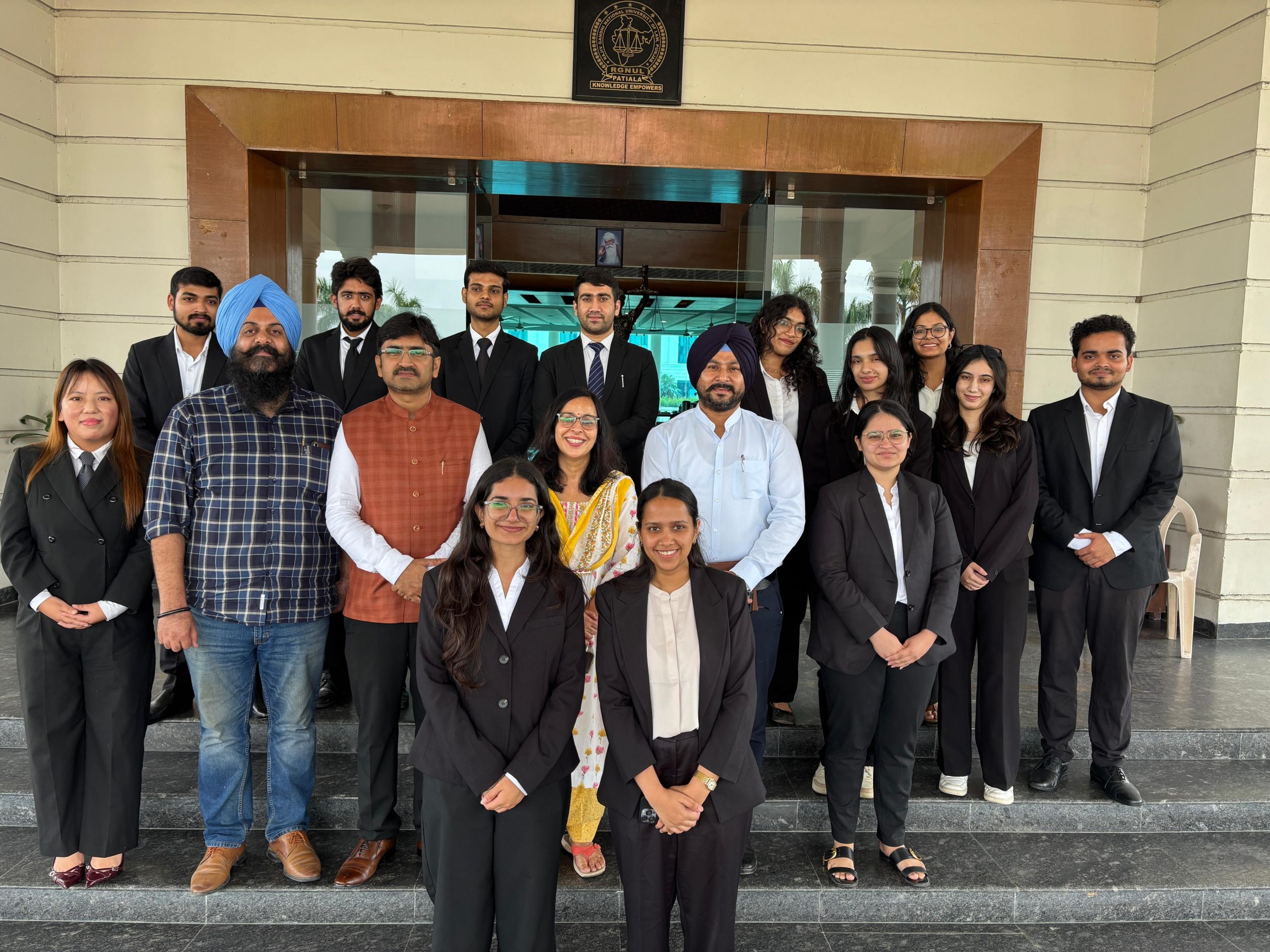

Patiala, September 15
The Centre for Advanced Studies in Criminal Law (CASCL) at Rajiv Gandhi National University of Law (RGNUL), Punjab, successfully hosted the Criminal Law Conclave on “An Assessment of the New Criminal Law Regime” on September 13, 2025. Conducted online, the event focused on evaluating India’s new criminal laws. The distinguished resource persons included Prof. (Dr.) Shruti Bedi, Professor & Director of University Institute of Legal Studies (UILS), Panjab University; Prof. (Dr.) Jyoti Dogra, Professor of Law, Faculty of Law, University of Delhi; Dr. Neeraj Tiwari, Associate Professor, National Law University Delhi; Ms. Nayanika and Mr. Siddharth from the India Justice Report; and Mr. Naveed from the Vidhi Centre for Legal Policy. The conclave was graced by RGNUL’s Hon’ble Vice Chancellor, Prof. (Dr.) Jai S. Singh; Registrar, Dr. Ivneet Kaur Walia; Dean of Academics, Prof. (Dr.) Naresh Vats; and Dean of Research, Prof. (Dr.) Kamaljit Kaur, who also shared their valuable insights.
watch…..RGNUL to Shine as a Beacon of Intellectual Empowerment
The conclave aimed to critically assess the three newly enacted criminal law statutes: the Bharatiya Nyaya Sanhita 2023 (BNS), Bharatiya Nagarik Suraksha Sanhita 2023 (BNSS), and Bharatiya Sakshya Adhiniyam 2023 (BSA). By convening prominent scholars, practitioners, and experts, the event sought to evaluate these laws through the perspectives of constitutionalism, jurisprudence, infrastructure, and policy, contributing meaningfully to the national discourse on their scope and impact.
Key Sessions and Insights
-
Prof. (Dr.) Shruti Bedi: “Decolonising Criminal Law? Continuity, Change, and Constitutionalism”
Prof. Bedi explored whether the new criminal laws genuinely depart from colonial legacies or merely perpetuate them within a constitutional framework. Her address set the tone for the conclave, providing a robust intellectual foundation for subsequent discussions. -
Prof. (Dr.) Jyoti Dogra: “Leveraging Scientific Advancements for ‘Nagrik Suraksha’: Anokhi Lal in Perspective”
Prof. Dogra highlighted the role of scientific and technological advancements in enhancing citizen security. She emphasized how forensic and technological tools can strengthen the effective implementation of justice under the new legal regime. -
Dr. Neeraj Tiwari: “Tech Integration under New Criminal Laws: Initiatives and Way Forward”
Dr. Tiwari discussed the government’s efforts to integrate digital processes into the criminal justice system. He elaborated on challenges in cyber adaptation, the potential for efficiency gains, and the modernization of procedures under the BNSS through technology. -
Ms. Nayanika and Mr. Siddharth: “Infrastructural Bottlenecks Emerging with the Implementation of the New Criminal Laws”
The duo from the India Justice Report addressed systemic challenges hindering the effective enforcement of the new laws. They highlighted issues such as inadequate institutional capacity, a shortage of trained personnel, and infrastructural gaps that could impede smooth implementation. -
Mr. Naveed: “Enduring Colonial Legacy in the New Criminal Laws”
Mr. Naveed from the Vidhi Centre for Legal Policy assessed whether the new reforms truly break away from colonial frameworks or represent a continuation of existing structures, offering a critical perspective on their transformative potential.
Conclusion
The Criminal Law Conclave provided a platform for in-depth analysis of India’s new criminal justice framework, fostering meaningful discussions on its constitutional, technological, and infrastructural dimensions. By bringing together academia, policy experts, and practitioners, the event underscored RGNUL’s commitment to advancing legal scholarship and contributing to the evolving discourse on criminal law reforms in India.