




Patiala, July 6
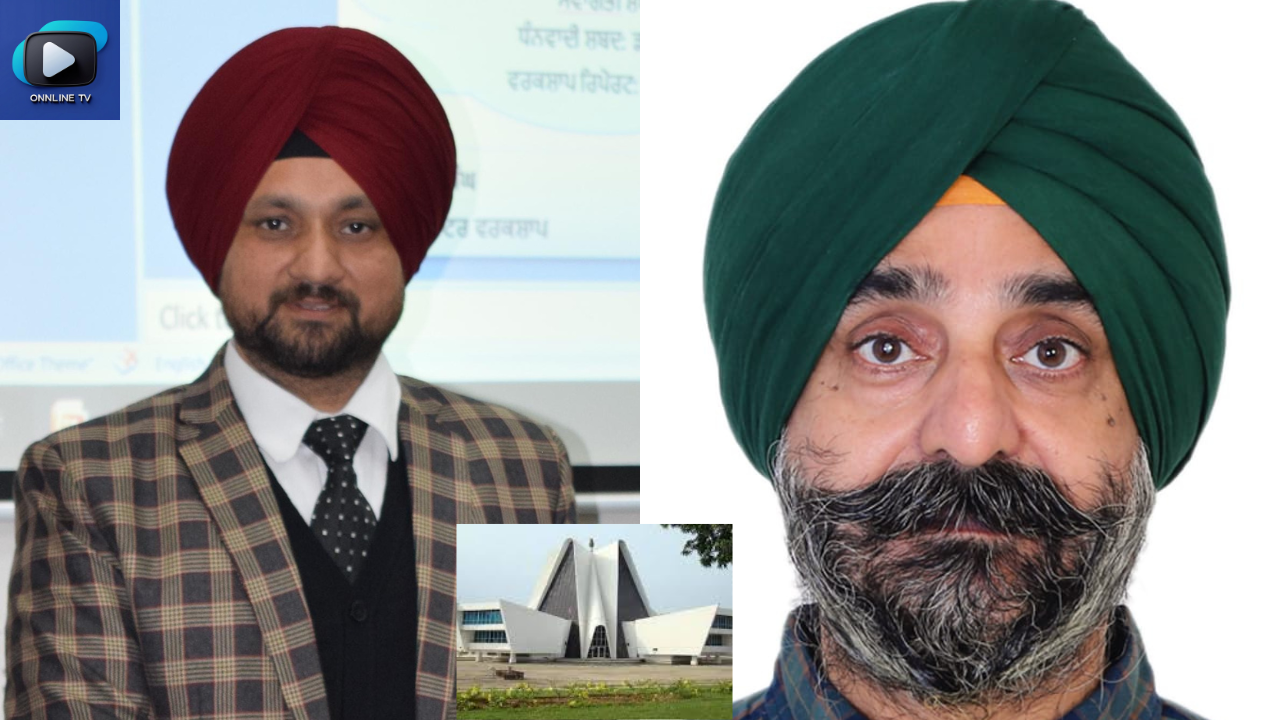
A groundbreaking research effort at Punjabi University has led to the development of a technology capable of converting Punjabi text into Braille, enabling visually impaired individuals to access content in their native language. This innovative system, equipped with features like Gurmukhi-to-Braille conversion, automatic font conversion, and text-to-speech functionality, was developed by researcher Dr. Charanjeev Singh Saroa under the supervision of Dr. Kawaljeet Singh in the Department of Computer Science and Engineering.
Key Features of the Technology
Dr. Kawaljeet Singh explained that the system is designed to provide visually impaired individuals with seamless access to knowledge resources in the Punjabi language, marking a revolutionary step toward inclusivity. The primary objective is to create a meaningful digital pathway for those who wish to acquire knowledge and information in their mother tongue. By efficiently converting Gurmukhi script into Braille, the technology fosters self-reliance and enhances the quality of life for visually impaired individuals.
Dr. Charanjeev Singh detailed the system’s capabilities:
-
Gurmukhi-to-Braille Conversion: The system instantly converts Punjabi text into Grade 1 and Grade 2 Braille.
-
Grade 1 Braille: Involves letter-based conversion, mapping each Punjabi character to a corresponding Braille symbol with 99.9% accuracy.
-
Grade 2 Braille: Enhances efficiency by using optimized Braille code patterns, achieving 99.7% accuracy.
-
-
Unicode Support: Accepts Unicode-based text input and exports Braille output in Braille Ready Format (BRF) or text format, compatible with screen readers or Braille printers.
-
Data Corpus: A comprehensive dataset comprising 12.7 million words, 49 million characters, 25 million bigrams, and 16 million trigrams was compiled, serving as a foundational resource for future linguistic analysis, machine learning, and natural language processing (NLP) applications.
-
Automatic Font Converter: In collaboration with Dr. Rajwinder Singh from the Punjabi Department, an ASCII-to-Unicode font converter was developed, automatically recognizing and converting input text fonts to Unicode with 99.8% accuracy. This is particularly useful for processing data in diverse fonts that are not directly computer-readable.
Social and Technical Significance
Vice-Chancellor Dr. Jagdeep Singh lauded the research team, emphasizing the project’s dual significance in technical innovation and social development. “Such research not only advances technology but also reshapes society by connecting marginalized groups to mainstream development,” he said. He highlighted that the project could serve as a model for developing Braille systems for other regional languages, extending its impact beyond Punjabi.
Dr. Jagdeep Singh noted that initiatives like this empower sections of society often left behind due to limited access to technology and resources. By enabling visually impaired individuals to engage with Punjabi literature and knowledge, the technology promotes inclusivity and self-sufficiency, aligning with broader societal goals.
watch…..Punjabi University Urges Reform in Space Law and Addresses Campus Protest Ban
Potential Impact
This technology is poised to revolutionize access to educational and cultural resources for visually impaired Punjabi speakers. Its high accuracy and versatile features make it a practical tool for real-world applications, while the extensive data corpus lays the groundwork for future advancements in linguistic and computational research. The project underscores Punjabi University’s commitment to leveraging technology for social good and preserving the linguistic heritage of Punjab.