




-Punjab CM Urges Centre to Utilize Chenab Water to Resolve SYL Dispute and Meet Water Needs of Punjab and Haryana
New Delhi, August 5
Punjab Chief Minister Bhagwant Mann has called on the Government of India (GOI) to leverage the waters of the Chenab River to address the longstanding water dispute between Punjab and Haryana, effectively shelving the contentious Satluj Yamuna Link (SYL) canal issue.
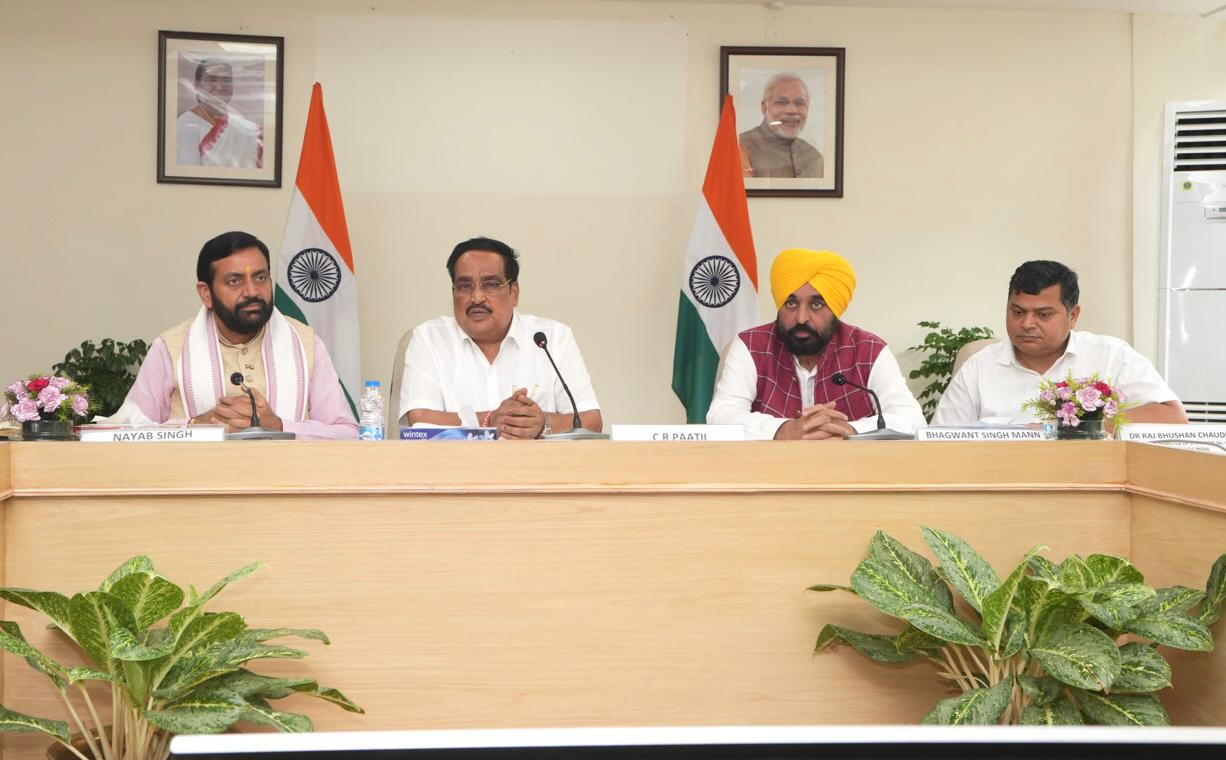
During a meeting convened by Union Jal Shakti Minister CR Patil to discuss the SYL canal, CM Mann highlighted that the suspension of the Indus Water Treaty with Pakistan, as announced by the Union Government on July 9, presents a significant opportunity for India to utilize Chenab River water, previously allocated to Pakistan. He proposed diverting this water to Indian dams such as Ranjit Sagar, Pong, or Bhakra, necessitating new canals and infrastructure in Punjab. Mann emphasized that these canals should first meet Punjab’s water needs, with surplus water then supplied to Haryana and Rajasthan through the same system.
Mann underscored that utilizing Chenab water would reduce Punjab’s reliance on groundwater, rejuvenate surface irrigation, and bolster the state’s agricultural sector, a cornerstone of its economy. This approach would also safeguard Punjab’s depleting groundwater reserves for future generations. Given Punjab’s critical groundwater depletion, Mann urged that the state be prioritized in the allocation and diversion of western river waters. He advocated for constructing new storage dams upstream of Bhakra and Pong in Himachal Pradesh to enhance water storage and regulation.
To permanently resolve the SYL issue, Mann proposed the Sharda-Yamuna Link to transfer surplus Sharda water to the Yamuna River and divert Chenab water to the Beas River via the Rohtang tunnel, eliminating the need for the SYL canal. He urged prioritizing the Sharda-Yamuna Link project to meet Haryana’s water needs from the Ravi-Beas system, while also addressing Delhi’s growing drinking water demands and ensuring water availability for Rajasthan.
Mann further suggested revisiting the 1994 Memorandum of Understanding (MoU) on Yamuna water allocation, set for review in 2025, to include Punjab as a partner state. He proposed allocating 60% of surplus Yamuna water to Punjab. Additionally, he noted that Haryana receives unaccounted water from rivers like Ghaggar, Tangri Nadi, Markanda, Saraswati Nadi, and others, which should be factored into water-sharing decisions.
watch….Become ‘Generals’ in the War Against Drugs: CM Mann to Defence Committee Members
Highlighting the emotive nature of the SYL issue, Mann warned that its construction could spark serious law-and-order challenges in Punjab, with ripple effects in Haryana and Rajasthan. He noted that land for the SYL canal is unavailable and that Punjab receives only 40% (14.22 MAF) of the 34.34 MAF water from the Ravi, Beas, and Satluj rivers, with the remaining 60% allocated to non-riparian states like Haryana, Delhi, and Rajasthan. This has increased pressure on Punjab’s groundwater, with 75% of its 153 blocks over-exploited, compared to 61% in Haryana.
Mann pointed out the exponential rise in tube wells in Punjab, from 6 lakh in the 1980s to 14.76 lakh in 2018, reflecting a 200% increase and the highest groundwater extraction rate in India (157%). Despite this, Punjab contributes significantly to national food security, producing 47% of India’s wheat (124.26 lakh metric tonnes in 2024) and 24% of its rice for the central pool.
Punjab’s total water requirement is 52 MAF, but it has access to only 26.75 MAF (12.46 MAF from surface water and 14.29 MAF from groundwater). Mann noted that while Punjab shares its river water with partner states, it alone bears the financial burden of flood damage. He proposed that partner states compensate Punjab for flood-related losses, given the shared benefits of river water.
Mann called for reviewing water-sharing agreements and tribunal decisions in light of changing environmental conditions, citing international norms that mandate reviews every 25 years. He argued that Punjab’s claim to Yamuna water is justified, as the 1972 Irrigation Commission Report recognizes Punjab as riparian to the Yamuna. He also highlighted that the Punjab Reorganisation Act of 1966 is silent on both Yamuna and Ravi waters, and Punjab’s 2004 Termination of Agreements Act has already nullified the 1981 agreement on surplus Ravi-Beas waters.