




Tax terrorism prevails as governments harass traders while political parties demand donations during elections
Local markets to be upgraded, long-pending issues of shopkeepers to be resolved on priority
Even after four years in power, people openly praise the AAP government
Previous Congress and Akali governments lacked the courage to face public feedback
The Punjab State Traders Commission aims to simplify the tax system, make it more transparent and trader-friendly
The commission will propose concrete measures to reduce tax burdens and eliminate unnecessary procedural hurdles
Shopkeepers are true patriots who drive the nation’s economy
The commission will ensure the welfare of shopkeepers and traders
Mohali, 08 January
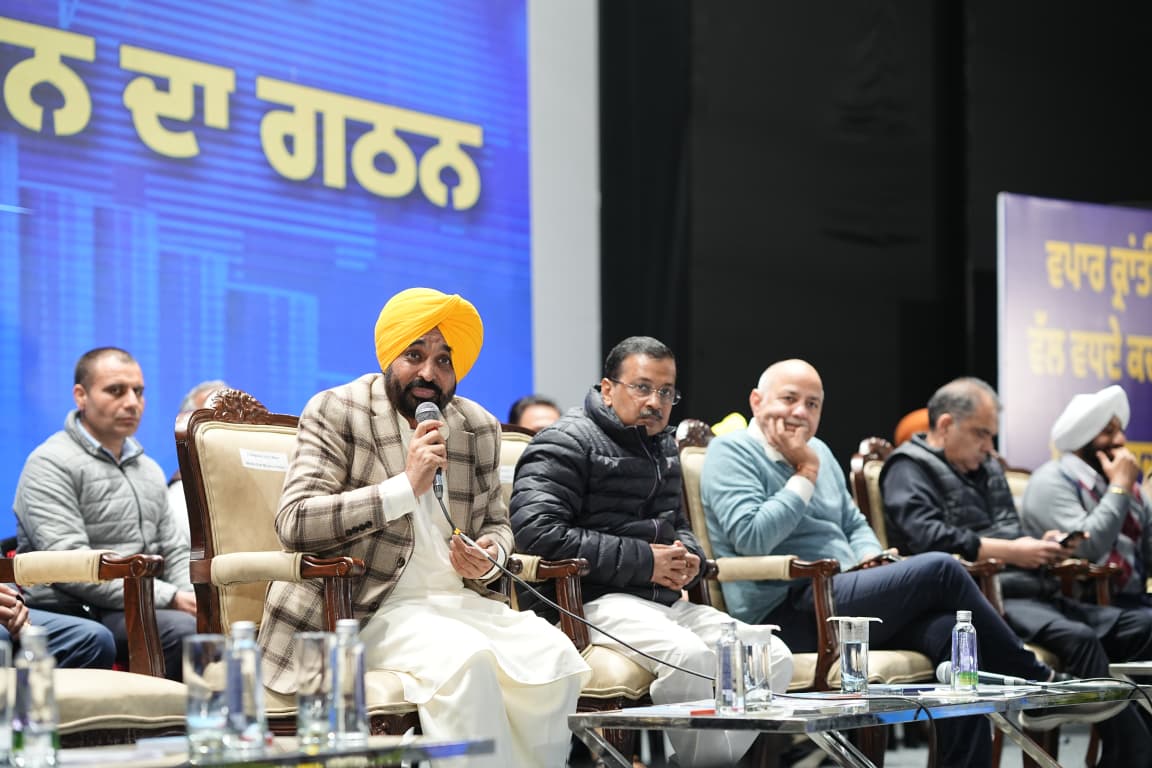
In the inaugural meeting of the Punjab State Traders Commission held in SAS Nagar (Mohali), Aam Aadmi Party (AAP) National Convenor Arvind Kejriwal and Punjab Chief Minister Bhagwant Singh Mann described the initiative as a major step to end years of neglect and bureaucratic harassment faced by traders and shopkeepers.
The AAP leader emphasized that shopkeepers would no longer need to shuttle between government offices, as the AAP government is bringing governance directly to markets and traders.
Kejriwal hailed the commission as the start of a new era of business reforms in Punjab, promising to simplify taxes, end “tax terrorism,” and remove needless bureaucratic obstacles. CM Mann echoed this, calling shopkeepers the real patriots who fuel the economy and expressing confidence that the commission would protect their welfare and dignity statewide.
In his address, Arvind Kejriwal said: “Today marks a new beginning for small shopkeepers, traders, and markets that no one paid attention to before. I congratulate all members of these commissions at various levels for taking on this responsibility. Our government has completed four years, and I noticed something remarkable today: everyone in this hall is not a party worker but independent individuals—presidents of market associations, representatives from sector-specific trade bodies like textiles and tiles, from diverse backgrounds.”
Reflecting on public sentiment, he added: “It’s often said that anti-incumbency builds after four years. Previous Congress and Akali governments avoided open feedback—had they passed a microphone around, they would have faced abuse. But today, people praised our work openly after four years.”
Kejriwal criticized the negative view of traders across governments: “Traders have always been seen as thieves to be looted through taxes. GST remains, and I hope one day our central government frees you from it. There’s tax terrorism from governments and donation demands from parties during elections. But we don’t view traders that way.”
Sharing his personal background, he noted: “I come from a trading family and understand your struggles. As a child, I managed my uncle’s grocery shop during summer vacations. Traders work tirelessly, take risks, earn modestly, pay taxes, create jobs, support families, and fund community activities—yet governments harass them.”
He linked trader welfare to national progress: “No country advances without protecting even its smallest shopkeeper and providing ease of doing business. Big investments are good, but small shopkeepers—running grocery, clothing, bakery, or tile shops—have been ignored. For the first time, a government ensures they don’t need recommendations or bribes for work.”
Explaining the commission’s structure, Kejriwal said: “We are integrating traders into governance. There will be a state-level commission, district-level ones, and crucially, constituency-level bodies involving traders, local police, and administration. These will hold meetings in every market to discuss and resolve issues—personal problems like delayed work, or market-level ones like poor roads, lack of toilets, water, or law and order. Most will be solved locally, with policy-level issues escalated to the state.”
He promised: “Policies made with public input will be implemented effectively. We aim to complete one round of meetings in all markets within three months, resolve on-the-spot issues immediately, and address others at higher levels.”
CM Bhagwant Singh Mann described the program as unique in Punjab’s history: “Previous governments never did this. The sky is the limit for progress, and this initiative is for small shopkeepers’ welfare. AAP, formed by Arvind Kejriwal, aims to transform politics with value-based governance, not just play it.”
watch….“ਸਾਡੇ ਬਜ਼ੁਰਗ ਸਾਡਾ ਮਾਣ” ਮੁਹਿੰਮ 16 ਜਨਵਰੀ ਤੋਂ ਸ਼ੁਰੂ
Highlighting achievements, Mann said: “Over 61,000 youth got merit-based jobs. We closed 17 toll plazas, saving ₹64 lakh daily for people, and are converting them into Aam Aadmi Clinics.”
Contrasting with past regimes, he noted politicians amassed wealth while traders struggled. He urged shopkeepers to prepare a roadmap for Punjab’s development, assuring judicious use of increased government revenue.
Mann called shopkeepers true patriots driving the economy and criticized those who “sold the country” while targeting honest leaders like Kejriwal. He accused the central government of favoring industrialists and cutting schemes like MGNREGA, while Punjab commits to workers’ salaries and demands pending central funds.
Reaffirming his promise, Mann said governance now reaches villages and towns, not just offices.
Senior AAP leader Manish Sisodia, Punjab in-charge, said traders’ prosperity depends on government intent: “Traders are Punjab’s economic backbone but faced endless hurdles. This commission empowers them for the first time in the country. Members understand traders’ issues firsthand and will resolve them at doorsteps, boosting trade statewide and setting a national model.”
Sisodia added: “The commission will work directly in markets, improve local conditions, address routine issues, and ensure shopkeepers no longer run around offices—the government will reach them.”
The event was attended by Cabinet Ministers Aman Arora, Harpal Cheema, Sanjeev Arora, and others.