


Patiala, August 12,
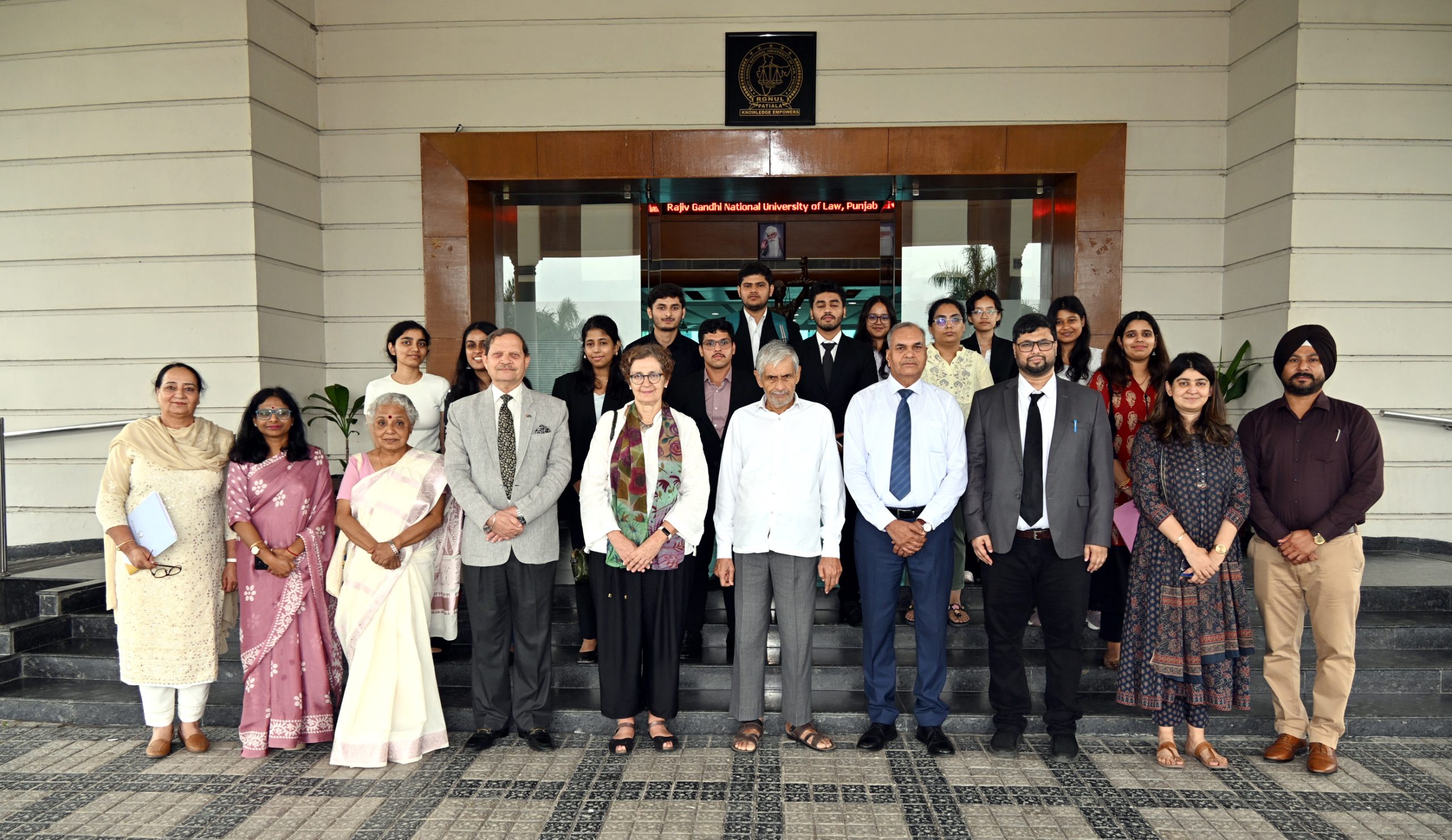
The Centre for Advanced Studies in International Humanitarian Law (CASH) at Rajiv Gandhi National University of Law (RGNUL), Punjab, successfully organized a one-day international symposium titled “The Geneva Conventions at the 76th: Contemporary Challenges” on its campus in a hybrid format. The event marked the 76th anniversary of the adoption of the four Geneva Conventions of 1949‒the cornerstone of international humanitarian law (IHL) that protect the wounded and sick on land, shipwrecked individuals at sea, prisoners of war, and civilians during armed conflicts.
The symposium began with a welcome address by Prof. (Dr.) Jai Shankar Singh, Vice Chancellor of RGNUL, who underscored the timeless significance of the Geneva Conventions and the pressing need to tackle modern challenges in their implementation.
The event featured distinguished experts who addressed critical issues. Major General P.K. Goswami highlighted alarming trends such as the targeting of civilian areas, urban warfare, disinformation, and the use of autonomous systems and cyber tools. He called for regulating new technologies, governing private military companies, and strengthening mechanisms to protect civilians, emphasizing that while the past cannot be changed, the future can be shaped.
Wing Commander Dr. U.C. Jha explored the humanitarian impact of modern conflicts, citing examples like the Israel-Gaza war, the Syrian civil war, and threats to civilians, journalists, and children. He discussed challenges posed by cyber warfare, lethal autonomous systems, AI targeting, and hypersonic missiles, which strain IHL principles of distinction, proportionality, and precaution. Dr. Jha stressed that the Geneva Conventions, established in a pre-digital era, need regular updates to address threats from space, biotechnology, and non-state actors in 21st-century conflicts.
Ms. Areti Sianni, Chief of Mission, UNHCR India and the Maldives, highlighted the escalating global displacement crisis and UNHCR’s role in protecting refugees and internally displaced persons. Praising India’s humanitarian tradition toward Tibetan, Sri Lankan, and other refugees, she advocated for a national refugee policy framework to replace ad hoc measures. Ms. Sianni urged India to leverage its Global South leadership to address displacement causes and encouraged universities to develop innovative solutions for conflict victims.
Dr. Ivneet Walia, Associate Professor of Law and Registrar, concluded the session by addressing the evolving nature of warfare and humanitarian protection. She noted that emerging technologies, including advanced AI, autonomous weapons, and cyborg technology, present new challenges to IHL. Dr. Walia emphasized the need to adapt IHL to modern realities to protect civilians and uphold humanitarian principles in future conflicts.
An Open House Discussion, moderated by Dr. Sunod Jacob, Government Liaison Officer with UNHCR, facilitated in-depth dialogue among speakers, faculty, and students on pressing humanitarian issues, including compliance challenges in contemporary armed conflicts.
watch…..RGNUL Faculty and Scholars Present Research at ILO’s Regulating for Decent Work Conference in Geneva
The symposium concluded with presentations by RGNUL Research Centres to UNHCR, showcasing the university’s research capabilities and commitment to advancing IHL scholarship.
Dr. Sangeeta Taak and Dr. Sukhwinder Kaur Virk, Assistant Professors of Law at RGNUL and convenors of the event, expressed gratitude to the speakers, participants, and UNHCR for their support. They noted that the symposium not only honored the legacy of the Geneva Conventions but also fostered meaningful academic exchange and critical reflection on contemporary humanitarian law challenges.